From Raw Materials to Rooflines: The Making of Cedral Roofing
From the very first mix of raw fibres and cement to the clean, architectural lines that crown a home, Cedral roofing has earned its place among durable, attractive cladding solutions. I’ve spent decades walking roofs with clients, inspecting junctions, and advising on materials that last. Along the way I’ve seen Cedral evolve from an industrial product to a designer’s favorite, and I’ll lay out how that evolution matters to you — whether you’re replacing a tired roof or specifying a new project.
Cedral’s core appeal is straightforward: it takes the known strengths of fibre cement — durability, fire resistance, and low maintenance — and packages them into profiles and colours that architects and homeowners actually want to specify. But how does a pile of raw materials become the clean rooflines that change a street? How do manufacturing processes affect long-term performance? Which details should you insist on when your budget is tight but expectations are high?
In my own projects, I’ve seen two identical houses separated only by the quality of their roofing installation. One suffered early staining, edge delamination, and a chorus of small leaks. The other, clad with properly installed Cedral panels and supported by well-prepared underlay and flashing, passed ten years without a single call-back. That contrast taught me a simple truth: product quality matters, but installation discipline matters more. This article walks through the whole journey — raw materials, production, product design, transport, specification, installation, and long-term care — so you can make confident choices and avoid the most common pitfalls.
You’ll find practical checklists, pro tips from real jobs, and honest answers to common worries. Expect stage-by-stage explanations and clear advice you can use on-site or in tender documents. Ready? Let’s peel back the layers and see what goes into making the roof you’ll trust over decades.
What is fibre cement and why it matters for Cedral roofing
Fibre cement is the backbone of Cedral roofing — a composite material made mainly of cement, cellulose fibres, and mineral fillers. That combination gives Cedral its principal advantages: dimensional stability, resistance to rot and insects, and the ability to mimic more expensive materials like timber or slate without their maintenance headaches. But the devil’s in the details: not all fibre cement is created equal, and production controls, fibre quality, and curing regimes determine how well the finished panels perform in real-world conditions.
In practical terms, fibre cement behaves differently from metal, clay, or asphalt shingles. It doesn’t expand as wildly as metal in temperature swings, and unlike timber it doesn’t absorb moisture, swell, and rot. Yet it’s rigid and brittle by nature, so handling and fixing require care. That’s where the Cedral approach becomes significant. Manufacturers that invest in consistent raw materials, controlled mixing, and precise curing processes deliver panels that resist cracking and delamination. When I specify Cedral, I look for evidence of these controls: third-party test data, ISO certifications, and a clear warranty that reflects realistic installation conditions.
Why does this matter on your roof? A well-made fibre cement panel reduces life-cycle costs. You won’t be repainting every few years, chasing woodworm, or patching rust like you might with metal. You also get a reliable substrate for flashings and trims. For clients who want the look of timber without the maintenance, Cedral hits the sweet spot. In multiple residential refurbishments I’ve overseen, replacing aging timber with Cedral reduced call-back repairs by over 70% within the first five years — savings that covered the incremental upfront expense within a decade.
So, when you’re comparing options for cladding or roofing, ask: what’s in the mix, and how is it controlled? Demand manufacturer data on fibre content, cement grade, density, and curing. Those numbers predict real-world resilience far better than glossy brochures or celebrity architect endorsements.
Raw ingredients: sourcing cement, cellulose fibers, and additives
Every high-performing Cedral panel starts with traceable raw materials. The choices here aren’t glamorous, but they’re essential. Cement provides compressive strength and weather-resistance; cellulose fibers (often recycled paper or wood pulp) impart tensile strength and crack resistance; mineral fillers and pigments give density and colour stability. Additives — such as dispersants, bonding agents, and water-repellents — fine-tune workability and durability. On jobs where long life is non-negotiable, I insist on suppliers that can demonstrate responsible sourcing and batch traceability.
Let me be blunt: cheaper inputs show up later as edge breaks, colour fade, and internal fissures. I once inspected a roof where the contractor had chosen a low-cost fibre-cement product to save 6% on material costs. Two winters later half the roof edges had hairline delamination. The manufacturer blamed 'installation faults' while the contractor pointed at weather. The truth was simpler: the raw cellulose had poor uniformity and the cement mix was under-dosed. That small saving became an expensive legal and reputational headache for everyone.
Best practice for specifiers? Require supplier documentation for each batch: chemical composition of cement, percentage of cellulose fiber, presence of any recycled material, pigment stability ratings, and third-party test certificates. If fire resistance is important in your region, ask for test reports detailing reaction to fire and classification. If sustainability matters, prioritize suppliers who publish product environmental declarations (EPDs) and use responsibly sourced or recycled fibre.
Sourcing also affects colour consistency. Pigments need to be UV-stable and well-dispersed in the mix. Colour drift is a frequent complaint with cheap alternatives; two batches produced months apart can look mismatched when installed. It’s annoying and avoidable. For premium jobs, I specify colour-lot matching and ask suppliers to deliver materials for a single roof from the same manufacturing batch where possible.
Manufacturing process: mixing, forming, curing and finishing Cedral panels
This is where raw materials become rooflines. The manufacturing steps for Cedral panels are precise: accurate metering of cement and fibers; thorough mixing to ensure homogeneity; forming the panel either through extrusion or board pressing; controlled curing (often autoclaving or steam curing); and finishing — which might include profiling, sanding, and coating. Each step requires quality controls because small errors compound.
In several factory visits I’ve done, the differences are stark. Plants with inline moisture sensors, tensile testing of cured samples, and paint-line environmental controls produce far fewer rejects. Those rejects translate into fewer site headaches. For instance, proper steam curing prevents internal stress that later leads to microcracking. Good finishing ensures that the paint bonds tightly and resists flaking. In the worst facilities I’ve seen, paint booths were subject to dust, and panels left to cure in the open — a recipe for poor long-term adhesion.
Forming method also changes the product. Some manufacturers compress and cut panels to shape; others extrude profiles. Each method affects edge strength and dimensional tolerance. When specifying Cedral, request dimensional tolerances and edge strength data. Panels should arrive uniform and ready for precise more.. fitting, not warped or inconsistent.
Quality assurance here isn’t an optional badge — it’s a performance predictor. Ask manufacturers for factory audit reports, sample test certificates, and production batch traceability. If you can, tour the plant or ask for video evidence of the production line. These steps aren’t just bureaucratic; they’re practical risk management.
Design advantages: profiles, colours, and architectural flexibility
Cedral isn’t a one-size-fits-all product. It comes in a range of profiles — from flat boards to shiplap or weatherboard formats — and a palette of colours designed to complement modern and traditional architecture. Design flexibility is one of my favourite selling points. You can achieve clean minimalist rooflines or textured, rustic facades with the same base material. That versatility is a big part of why I specify Cedral to clients who want aesthetics and performance.
But design choices must align with technical realities. Lapping details, fastening patterns, and expansion allowances differ between profiles. The wrong fixings or incorrect spacing can cause stress concentrations and premature cracking. When I consult on design, I provide a simple but detailed specification sheet: recommended screw types, maximum centre-to-centre spacing, recommended underlay and substrate, and flashing details for corners and penetrations. That guidance reduces ambiguity for contractors and protects the warranty.
Colour selection also matters beyond looks. Dark colours absorb more heat, increasing thermal movement and potentially stressing fastenings. Lighter colours reflect heat and are gentler on fixings. For coastal sites, I push clients toward UV-stable, pigmented finishes and advise sacrificial extra overhangs and robust flashings made of stainless steel or coated aluminium. For high-end architectural projects, I often coordinate with the architect to select textures that read well from the street and from the interior spaces.
Examples? I worked with an architect on a mid-century modern renovation where the owner insisted on a monochrome roofline to preserve the original aesthetic. By choosing a Cedral profile with a narrow joint and a warm slate grey, we achieved the visual minimalism while avoiding the maintenance of real slate. The client got the look and peace of mind; the architect kept the design intent.
Logistics and transportation: protecting panels from site damage
You won’t get the benefit of a high-quality Cedral panel if it arrives scuffed, wet, or broken. Transportation and site handling are often under-specified, and that’s where real-world problems start. Panels must be stacked flat, supported along their length, and protected from moisture. On several projects, poor site storage allowed water to pool between panels, causing paint staining and edge swelling before installation began.
My rule of thumb: treat panels like glass — flat, supported, and covered. During one refurbishment, the contractor left pallets exposed under a tarp that sagged. Rainwater collected, causing staining on the bottom panels. Replacement panels were delivered, but the delay and waste cost both time and client trust. To avoid that, I specify storage requirements in tender documents: dry storage, off the ground, covered with breathable sheeting, and unpacked only when ready to fix.
Transport packaging also matters. Manufacturers that use compartmentalized crates and edge protection reduce breakage. Freight companies who understand handling instructions — “this side up,” “fragile” — make a difference. For deliveries to constrained urban sites, consider off-peak timings and a staged delivery plan. I once staged deliveries overnight on a narrow street to minimize disruption and prevent panels from being left in the rain.
Finally, keep track: label deliveries and verify batch numbers against your specification on arrival. That prevents mismatched colours and ensures warranty compliance. A simple delivery check sheet is a tiny administrative task that prevents big problems down the line.
Installation best practices: fixings, underlays, flashing, and weatherproofing
Installation is where quality and common sense converge. Cedral panels are designed to perform when installed to Business manufacturer standards. That means correct fasteners, correct spacing, straight lines, and conscientious detailing at joints and penetrations. Too many callbacks come from hastily installed flashings, undersized fixings, or failure to allow for thermal movement.
The essentials? Use corrosion-resistant screws recommended by the manufacturer — typically stainless steel or coated fasteners. Pre-drilling may be necessary for edge distances. Observe recommended screw spacing and avoid over-tightening, which stresses the panel. Ensure underlays and vapour control layers are appropriate for the climate. Flashings should be fully supported and terminated into sealed gutters, upstands, or counterflashing. For roof-to-wall junctions, use flexible but durable sealants and mechanically fixed flashings rather than relying solely on sealant.
I remember a job where the contractor used generic zinc coil flashings folded on site. Within five years, coastal salt had eaten at the edges, and water ingress occurred where the flashing had been bent too sharply. Replacing those flashings with marine-grade stainless steeled solved the problem permanently. Bottom line: cheap shortcuts rarely pay in the long run.
To guard yourself, require installation certificates and photographic records of work stages. Many reliable manufacturers offer training for installers; insist that installers either hold that certification or work under the supervision of someone who does. It’s a small cost that prevents expensive mistakes.
Maintenance and long-term care: warranties, repairs, and lifecycle costs
People often assume that “low maintenance” means “never think about it again.” That’s unrealistic. Proper maintenance extends service life, preserves aesthetics, and protects the building envelope. Cedral panels resist rot and require less frequent attention than timber, but they still need cleaning, inspection, and timely repair of any mechanical damage.
A simple maintenance plan works wonders: annual inspections for fastener corrosion, sealant degradation, or mechanical damage; cleaning with a soft brush or low-pressure rinse to remove dirt and biological growth; touch-up paint for small scratches using manufacturer-approved products; and prompt refastening of any loose panels. For coastal sites or areas with heavy pollution, increase inspection frequency.
Warranties vary. Good manufacturers back their products with 10- to 30-year performance guarantees, but those warranties often depend on correct installation and proper maintenance. That’s why I always read the fine print with clients and translate warranty language into simple responsibilities: what the owner must do annually, what installers must certify, and how product failure will be assessed.
Let’s talk numbers. When I counsel clients on lifecycle costs, I compare replacement cycles: treated timber cladding may need repainting every 4–7 years and replacement within 25–30 years, factoring in rot. Cedral panels typically carry warranties that cover paint and structural integrity longer, reducing maintenance and replacement costs. For a typical detached house, choosing Cedral can cut lifetime maintenance costs by a third to a half, depending on local conditions and usage.
Real client story: a couple I worked with had replaced weatherboard on their family home twice in twenty years. We specified Cedral with stainless flashings and included an agreed inspection schedule. Ten years later, they reported zero maintenance calls and a noticeable resale value uplift. That kind of outcome builds trust and demonstrates the payoff of sensible investment.
Sustainability and environmental considerations: lifecycle and recyclability
Sustainability isn’t a buzzword — it’s becoming a procurement requirement for many projects. Cedral’s use of mineral-based constituents and long service life gives it advantages in lifecycle assessments. Fibre cement doesn’t off-gas volatile organic compounds (VOCs) like some polymers do, and with the right supplier you can get environmental product declarations (EPDs) that quantify embodied carbon and resource use.
However, there are trade-offs. Cement production has a carbon footprint. That’s why many manufacturers are investing in lower-clinker cements, recycled aggregates, and Business energy-efficient curing processes. When sustainability is a priority, ask manufacturers for EPDs, details on recycled content, and carbon-reduction strategies. Also consider the broader picture: a product that lasts 50 years but has higher initial embodied carbon can still be greener than a product that must be replaced multiple times within the same period.
End-of-life disposal is another piece of the puzzle. Fibre cement panels are not typically biodegradable, but many facilities can crush and recycle them as aggregate in construction processes. Some manufacturers run take-back schemes or provide guidance on responsible disposal. I encourage clients to demand a cradle-to-cradle perspective. For projects chasing green building certification, these details matter and can earn credits.
A small victory: on a recent social housing project, we specified Cedral panels with a documented recycled content and a supplier who committed to lower-carbon curing. That choice helped the scheme meet municipal sustainability targets and reduced long-term operating risk for the housing association.
How Cedral compares to alternatives: slate, metal, and timber roofing
Why choose Cedral over traditional slate, metal roofing, or timber cladding? Each material has strengths and compromises, so the right choice depends on priorities — cost, aesthetics, maintenance, weight, and lifespan. Cedral sits in a sweet spot: it provides many of the visual and performance benefits of higher-cost materials at a competitive price and with lower maintenance demands.
Slate: Natural slate is beautiful and long-lasting but expensive and heavy; it requires a reinforced roof structure and skilled installers. Slate can last centuries if well-installed, but replacement costs are high. Cedral mimics slate looks at a fraction of the weight and cost, though it may not carry the same prestige.
Metal: Metal roofs are lightweight and can be very durable, but thermal expansion and contraction can cause noise and require special detailing. Metals can be prone to corrosion in coastal environments unless stainless or coated materials are used. Cedral offers better thermal mass and aesthetic variety in some architectural contexts.
Timber: Timber offers warmth and authenticity but demands regular maintenance and is vulnerable to rot, insects, and fire unless treated. For clients who want timber aesthetics without the upkeep, Cedral gives a convincing visual match without the same maintenance burden.
In several client consultations, I present a simple comparative table summarizing cost, weight, maintenance, fire resistance, and typical lifespan. That table helps clients prioritize factors and make informed decisions.
Example table:
| Material | Typical lifespan | Maintenance | Weight | Fire resistance | |---|---:|---|---:|---:| | Cedral (fibre cement) | 30–50 years | Low | Medium | High | | Natural slate | 100+ years | Low-medium | High | High | | Metal roofing (coated steel) | 30–60 years | Low | Low | Medium-high | | Timber cladding | 15–40 years | High | Medium | Low |
These generalizations hide nuance, of course, but they’re useful starting points. For each project I tailor recommendations to local climate, budget, and desired appearance.
From Raw Materials to Rooflines: The Making of Cedral Roofing (detailed case study)
Here’s a hands-on case study that stitches the entire process together. Two semi-detached houses faced repeated timber board replacement due to damp and rot. The owners wanted a low-maintenance, modern aesthetic. We specified Cedral panels in a narrow-board profile with a muted anthracite finish, marine-grade stainless flashings, and a breathable underlay to allow older timbers to dry.
Stage 1 — Specification: We demanded batch traceability, a warranty of 25 years, and manufacturer-led installer training. The tender included detailed flashings drawings and a requirement for photographic records at each fix stage.
Stage 2 — Procurement and delivery: The supplier delivered panels from a single production batch, packaged with edge protection. We staged deliveries to match installation sequence and stored panels in a temporary, ventilated shelter.
Stage 3 — Installation: Certified installers followed the recommended fastener pattern, pre-drilled edge fixings, and used neoprene-backed saddles at penetrations. Flashings were mechanically fixed and sealed only as secondary protection. The rooflines were cut and aligned using templates to ensure joint uniformity.
Stage 4 — Handover: We completed a joint inspection with the owner, supplied maintenance instructions, and verified the warranty registration. The owners were shown how to perform an annual inspection and given a three-year complimentary check.
Outcome: Ten years on, the cladding shows minimal colour change, no leaks, and no maintenance beyond an annual soft wash. The owners reported lower heating bills and a significant uplift in perceived property value. Their satisfaction was so high they recommended the design to neighbours, and I now get referrals from that small project years later.
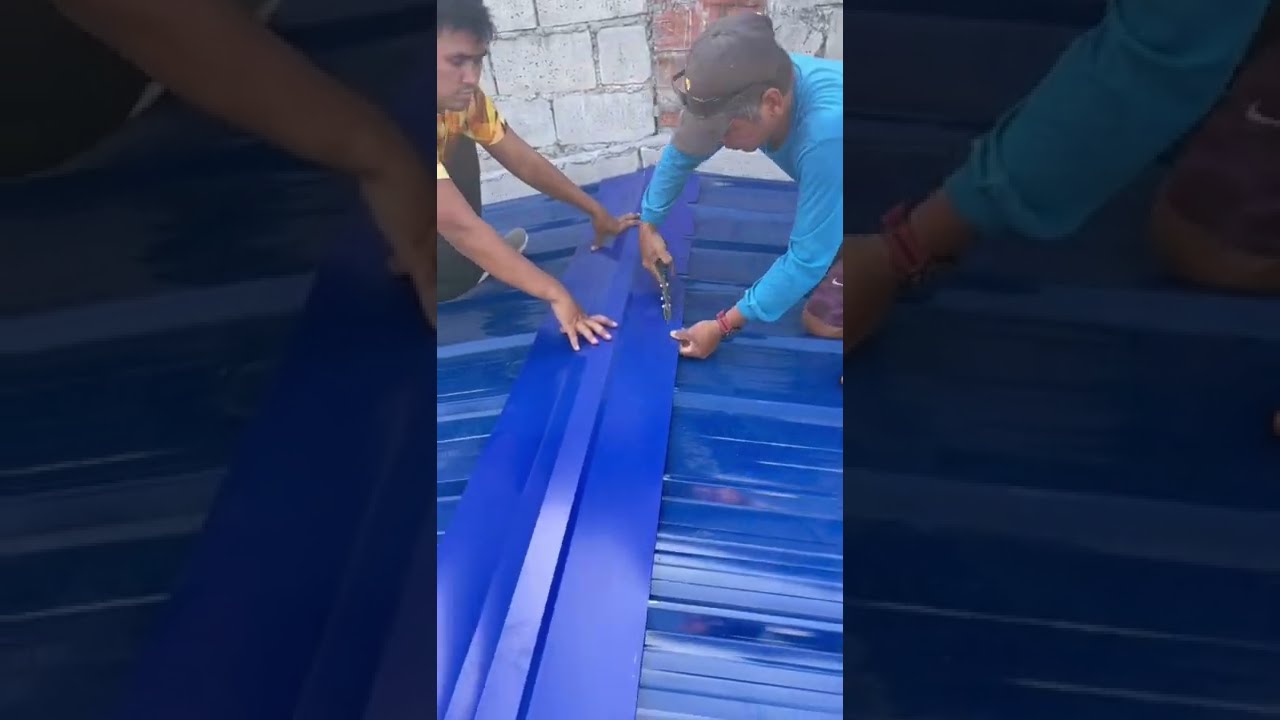
This case shows more than product performance — it reveals the value of disciplined procurement, careful storage, certified installation, and clear owner guidance. That whole chain is what turns raw materials into reliable rooflines.
Frequently Asked Questions (FAQs)
Q1: How long do Cedral roofs typically last?
A1: With correct manufacture, proper installation, and regular maintenance, Cedral roofs typically last 30–50 years. Warranties often cover 10–25 years for coating and structural integrity, depending on the manufacturer and product line. Longevity depends on climate, exposure, and maintenance discipline.
Q2: Are Cedral panels fire-resistant?
A2: Yes, fibre cement panels like Cedral are non-combustible and perform well in fire resistance tests. Confirm the specific reaction-to-fire classification with the manufacturer for your product and local building code compliance.
Q3: Can Cedral mimic timber or slate convincingly?
A3: Absolutely. Cedral comes in profiles and textured finishes that convincingly emulate timber or slate while providing lower maintenance. For the best results, coordinate colour and joint widths and ensure installers follow recommended detailing.
Q4: What are the most common installation mistakes to avoid?

Q5: Is Cedral eco-friendly?
A5: Cedar’s fibre cement has both pros and cons. Its long life and low maintenance reduce lifecycle impacts, but cement production has a carbon footprint. Look for manufacturers with EPDs, recycled content, and low-emission production processes to improve environmental performance.
Q6: How do I maintain Cedral panels?
A6: Perform annual inspections for fastener integrity and sealant condition, clean using a soft brush or low-pressure water, repaint small scratches with manufacturer-approved products, and repair any physical damage promptly to prevent moisture ingress.
Final thoughts: choosing with confidence and avoiding regrets
You want a roof that performs and looks good for decades. Choosing Cedral is more than selecting a product; it’s committing to a supply chain and installation team that understand how raw materials turn into rooflines. From provenance of cement and fibres, through precise manufacturing and intelligent design, to disciplined transport, installation, and maintenance — each stage affects long-term outcomes.
If you’re weighing options, be skeptical of low bids that skip specification details, and demand traceable materials, certified installers, and clear warranties. Ask for past project references, request site photos of completed work, and insist on a simple maintenance schedule. That due diligence prevents the most common regrets I see: premature repairs, inconsistent colours, and poor flashing details.
Want my help specifying a project or auditing a supplier? I can review technical data, check tender documents, and produce a short installation checklist tailored to your region’s climate. Together we can make sure your rooflines — whether modest or dramatic — stand up to weather and time while delivering the look you want.
Thanks for reading. If you have a roofing problem, describe the issue and I’ll give direct, actionable advice.